

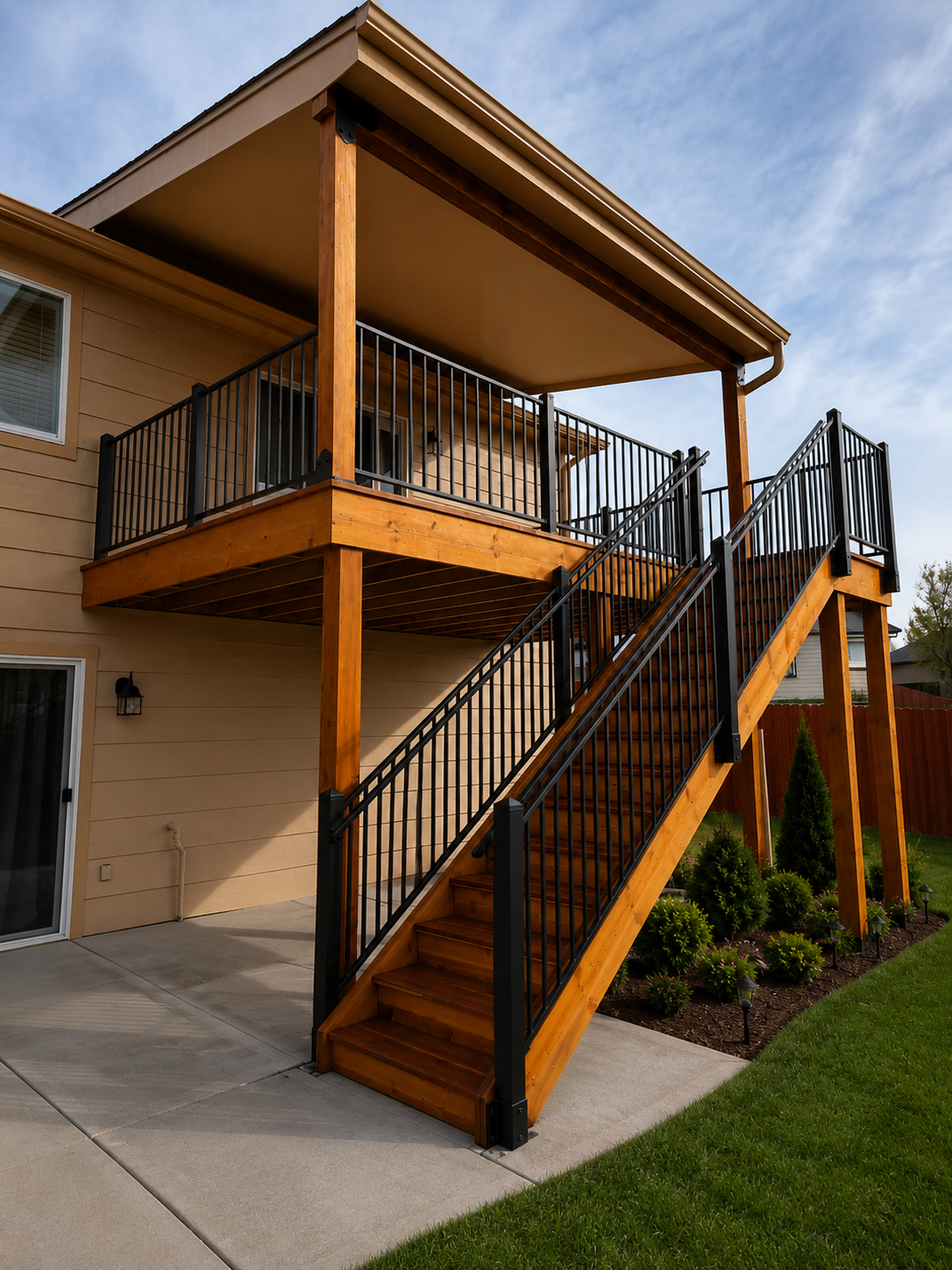
Building a new deck is one of the best ways to add usable outdoor living space and long-term value to your home. It is also one of the largest exterior improvements most homeowners will make. Before choosing materials, finalizing a design, or hiring the right deck builder in Colorado Springs, it helps to understand the decisions that will have the biggest impact on the finished project. This guide was created to help homeowners make informed decisions and avoid common mistakes before construction begins.
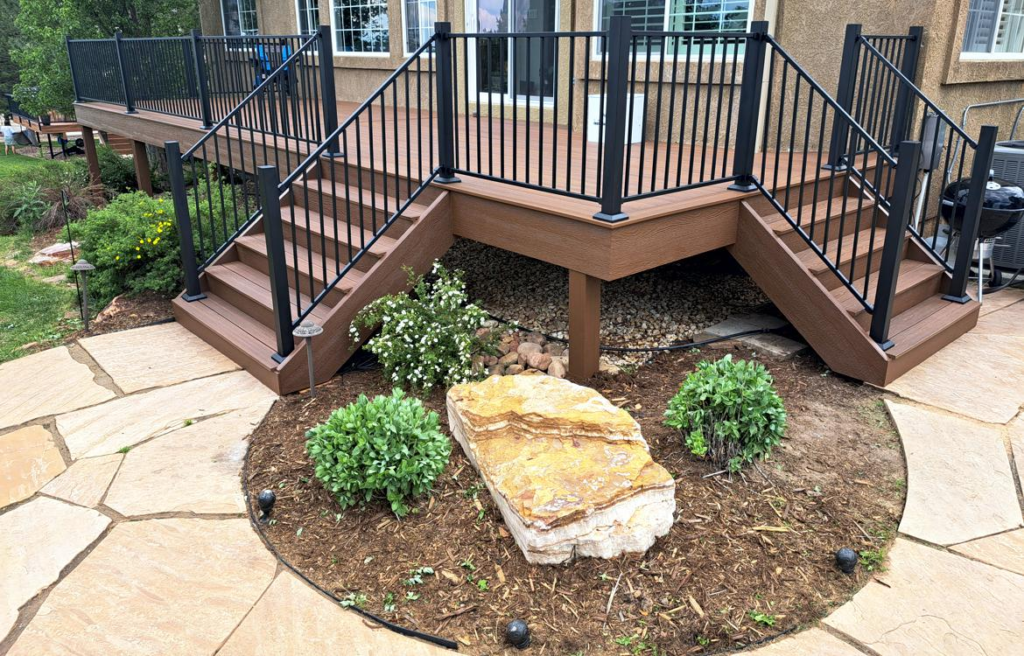
Why Building the Right Deck Matters
A well-designed deck should do more than add square footage to your backyard. It should complement your home, fit the way your family lives, and provide years of reliable performance. The right size, layout, materials, and construction methods all play a role in creating a deck that looks great, functions well, and adds lasting value. Taking the time to plan these details before construction begins can help you avoid expensive changes and ensure the finished deck is one you’ll enjoy for years to come.
Planning Your New Deck With a Deck Builder in Colorado Springs
Before choosing decking colors or railing styles, think about how you actually plan to use your deck. Will you need room for a dining table and grill? Do you entertain regularly? Where should the stairs be located so they don’t take away from usable space? Thinking through these details before the design is finalized can make a big difference in how comfortable and functional your deck is once it’s built.
Working with an experienced deck builder in Colorado Springs early in the planning process can help you avoid common design mistakes, understand local building requirements, and choose materials that fit your budget, lifestyle, and long-term goals.
Consider How Your Deck Fits Your Home
A great deck should look like it was always meant to be part of your home. Consider the architecture, rooflines, windows, landscaping, and the natural flow between your indoor and outdoor living spaces. A thoughtfully designed deck enhances your home’s appearance while creating a space that feels both functional and inviting.
Think Beyond Today
While it’s important to plan for how you’ll use your deck today, think about how your needs may change in the future. Your family may grow, you may entertain more often, or accessibility may become important later. Many homeowners tell us they wish they had built their deck just a little larger or planned for features they later wanted to add. Thinking about those possibilities now can help you design a deck that continues to work well for years to come.
Choosing the Right Deck Size for Your Colorado Springs Home
Choosing the right deck size is about more than simply measuring how much space is available. Think about the furniture you plan to use, how much room you’ll need around a dining table, where the grill will go, and how people will move between the house, stairs, and yard. A deck that’s too small can quickly feel crowded, while an oversized deck can overwhelm the home and take away valuable yard space. The goal is to create enough usable space without building more deck than you actually need.
Bigger Isn’t Always Better
One of the most common misconceptions is that every deck should be as large as possible. In reality, a deck should complement your home without overwhelming it. A properly sized deck creates balance, preserves yard space, and often looks more natural than an oversized structure. The goal is to design a deck that feels like it belongs with your home rather than simply adding square footage.
Composite vs. Wood Decking in Colorado Springs
One of the first decisions homeowners make when planning a new deck is choosing the decking material. In Colorado Springs, most homeowners choose between natural redwood and composite decking. The right choice depends on your budget, maintenance expectations, and long-term goals. Understanding the differences before construction begins can help you make a decision you’ll be happy with for years to come.
| Feature | Redwood | Composite |
| Appearance | Rich, natural wood grain | Consistent color and finish |
| Long-Term Investment | Lower upfront cost, but ongoing staining and maintenance should be considered. | Higher upfront cost, but significantly lower maintenance over the life of the deck. |
| Maintenance | Clean and stain every few years | Occasional cleaning |
| Lifespan | Excellent with proper maintenance | Excellent with minimal maintenance |
| Splinters | Possible over time | No splinters |
| WUI Compliance | May not be permitted as the walking surface in some WUI zones | Many approved products meet WUI requirements |
| Long-Term Value | Ongoing maintenance costs | Lower maintenance over the life of the deck |
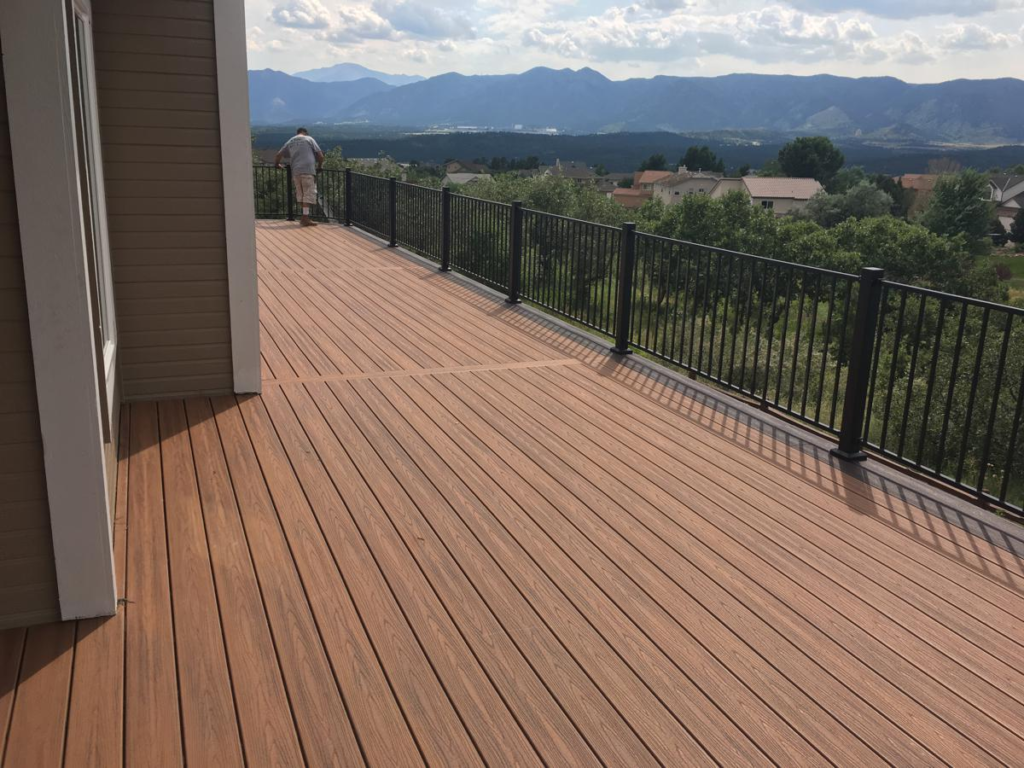
Redwood Decking
Redwood decking offers the natural beauty and warmth that many homeowners appreciate. Its rich color and natural resistance to decay make it an excellent choice for those who prefer the look and feel of real wood. Like all wood decking, redwood requires regular maintenance to preserve its appearance and protect it from Colorado’s intense sun, snow, and changing seasons. For homeowners who enjoy the character of natural wood and are willing to maintain it, redwood remains a timeless option.
Composite Decking
Composite decking has become the preferred choice for many homeowners looking for a low-maintenance outdoor living space. Unlike natural wood, composite decking doesn’t require routine staining or sealing and won’t splinter like natural wood can over time. While the initial cost is higher, many homeowners are surprised by how much smaller the price difference becomes when comparing composite to premium redwood and factoring in the cost of staining and long-term maintenance.
In our experience building decks in Colorado Springs, composite has become increasingly popular because homeowners can enjoy the look of a finished deck without the ongoing maintenance that comes with natural wood.
Wildland Urban Interface (WUI) Requirements
If your home is located within a Wildland Urban Interface (WUI) zone in Colorado Springs, your decking material options may be limited by local fire code requirements. Decking in these areas may be required to use ignition-resistant or noncombustible materials, such as approved composite products, rather than traditional wood decking. Redwood and other wood products may still be permitted for certain structural components and railings.
Homes located within the WUI also require additional fire review during the permitting process, and Colorado Springs Fire currently requires homeowners to complete a WUI Homeowner Acknowledgement Form as part of the plan approval process. Before choosing your decking material, it’s important to determine whether your property is within the WUI and make sure the product you select meets the current requirements published by the Pikes Peak Regional Building Department.
Which One Is Right for You?
There isn’t a single right answer for every homeowner. Some people prefer the natural beauty and character of redwood, while others would rather have the lower maintenance of composite decking. The right choice comes down to your budget, how much maintenance you’re willing to do, and which material you prefer for your home.
Choosing the Right Deck Builder in Colorado Springs
Choosing the right contractor is just as important as choosing the right materials. A well-built deck should provide decades of safe, reliable use, making experience, craftsmanship, and attention to detail essential. Before signing a contract, take time to research local builders, look at completed projects, verify licensing and insurance, read customer reviews, and ask questions about the construction process.
Experience Matters
Every property presents unique challenges, from sloping yards and changing elevations to window wells, existing patios, and HOA requirements. An experienced deck builder can identify potential issues before construction begins and recommend solutions that improve both the appearance and long-term performance of your deck.
Ask the Right Questions
Before hiring a contractor, ask who will actually be building your deck, whether permits are required, what specific products and materials are included in the estimate, and how unexpected issues or changes will be handled once construction begins. A reputable builder should be able to answer those questions clearly and explain the reasoning behind their recommendations.
Look Beyond the Lowest Price
While price is always an important consideration, it shouldn’t be the only factor when choosing a deck builder. Construction methods, material quality, warranty coverage, communication, and long-term value all play a role in the success of your project. The lowest proposal isn’t always the best investment if it results in compromises that affect safety, appearance, or durability.
Deck Design Ideas That Stand the Test of Time
Great deck design isn’t about following the latest trends. It’s about creating an outdoor living space that looks like it belongs with your home and functions well for years to come. The best decks combine thoughtful planning, quality materials, and practical design decisions that continue to look great long after construction is complete.
Build a Deck That Fits Your Home
Every home is different, and every deck should be too. Rooflines, windows, landscaping, elevation changes, and existing patios all influence the best design. A custom deck should complement your home’s architecture rather than overpower it, creating a seamless transition between your indoor and outdoor living spaces.
Think About Traffic Flow
One of the most overlooked parts of deck design is how people move through the space. Stair placement, door access, grilling areas, dining space, and furniture layout all affect how comfortable and functional your deck will be. A thoughtful layout often makes a bigger difference than simply adding more square footage.
Choose Features You’ll Enjoy for Years
Features like picture-frame decking, contrasting border colors, metal railings, pergolas, and integrated lighting can add both beauty and functionality to your deck. Rather than chasing trends, focus on timeless design choices that complement your home and fit the way you and your family will actually use the space.
Understanding Deck Permits in Colorado Springs
Most new deck projects in Colorado Springs require a building permit to ensure the structure complies with current building codes. Permits help verify that footings, framing, stairs, railings, and structural connections meet current requirements and are properly inspected during construction.
Why Permits Matter
Building without the proper permits can create challenges when selling your home, filing insurance claims, or making future improvements. Proper permits help document that the deck was built in accordance with the applicable building codes and inspected throughout construction.
Every Property Is Different
Setbacks, easements, HOA requirements, utility locations, and Wildland Urban Interface (WUI) regulations can all influence how and where a deck can be built. Taking these factors into account during the planning process helps avoid delays and unexpected changes once construction begins.
Work With a Builder Who Understands the Process
An experienced Colorado Springs deck builder should be familiar with the local permitting process and understand how to navigate plan review, inspections, and code requirements. Having the proper plans and approvals in place before construction begins helps your project move forward more smoothly and gives you confidence that your new deck is built to current standards.
Common Mistakes Homeowners Make When Building a New Deck
Building Too Small
One of the easiest mistakes to make is designing a deck around what fits today without allowing enough room to comfortably use the space. Once you account for a dining table, chairs, a grill, stairs, and room to move around them, usable space can disappear quickly. Taking the time to plan furniture placement and traffic flow before construction can help prevent a deck from feeling cramped once it’s finished.
Choosing Price Over Value
The lowest estimate isn’t always the best value. When comparing proposals, look closely at what is actually included, including the decking and railing products, framing materials, permits, warranties, and the scope of work. Two estimates can have very different prices because they aren’t necessarily proposing the same finished deck.
Not Thinking About Maintenance
Every decking material requires some level of care, but not all maintenance is the same. Understanding the long-term maintenance requirements before choosing your decking material can help you select a product that matches your lifestyle and expectations.
Hiring a Builder Without Doing Your Homework
Before signing a contract, take time to review completed projects, read customer reviews, verify insurance and licensing, and ask questions about the construction process. Choosing an experienced deck builder can make the difference between a smooth project and an expensive lesson.
There’s an old saying in construction: “If you think it’s expensive to hire a good carpenter, try hiring a bad one.” When you’re building something that should last for decades, experience and quality workmanship matter.
Frequently Asked Questions
How long does it take to build a new deck?
Every project is different, but many residential decks can be completed within one to two weeks once construction begins. Larger or more complex projects may take longer. Permitting, weather, material availability, inspections, and the size and complexity of the deck can all affect the schedule.
Is composite decking worth the additional cost?
For many homeowners, the answer is yes. Composite decking requires significantly less maintenance than natural wood and offers excellent long-term durability. While the initial investment is higher, many homeowners are surprised to learn that once the cost of premium redwood and professional staining are factored in, the price difference between a natural wood deck and a mid-level composite deck is often much smaller than expected.
Do I need a permit for a new deck?
Most new decks require a permit, although requirements can vary depending on the size, height, location, and scope of the project. Your builder should be able to explain what permits are required before construction begins.
How do I know what size deck is right for my home?
The right deck size depends on how you plan to use the space, your home’s layout, your yard, and your long-term goals. A thoughtful design often provides more value than simply building the largest deck possible.
Why Homeowners Have Chosen O’Leary & Sons Since 1988
Since 1988, O’Leary & Sons has specialized in building and restoring decks throughout Colorado Springs. Over the years, we’ve worked on thousands of decks and have seen firsthand what works, what doesn’t, and which construction details make a difference over time. We believe in giving homeowners straightforward advice, explaining their options, and building decks that are designed to last.
Ready to Start Planning Your Deck?
Building a new deck is an investment in your home, your family, and the way you enjoy your outdoor space. Whether you’re considering composite decking, natural redwood, or are simply looking for professional guidance, taking the time to plan your project carefully will help ensure the finished deck is something you’ll enjoy for many years.
If you’re ready to start planning your new deck, O’Leary & Sons would be happy to sit down with you, discuss your ideas, and help you determine the best options for your home, budget, and the way you plan to use your deck.