

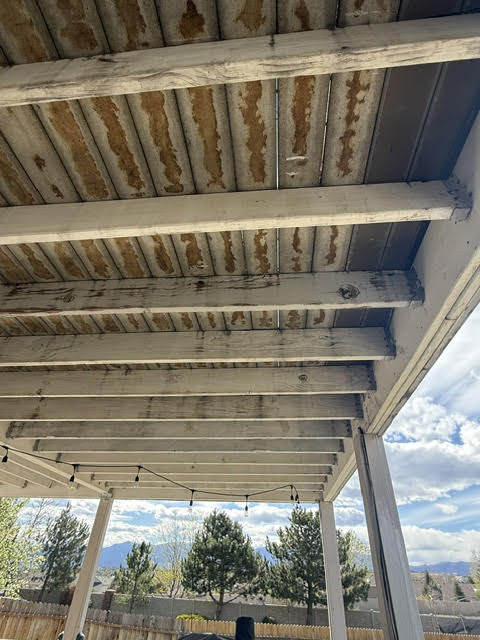
Your deck is more than just an outdoor living space. It is where families gather for cookouts, celebrate special occasions, and enjoy Colorado’s beautiful weather. However, even a well-built deck requires regular maintenance and occasional repairs to remain safe, structurally sound, and visually appealing.
At O’Leary & Sons, we inspect, repair, and rebuild hundreds of decks throughout Colorado Springs, Monument, Black Forest, Falcon, Woodland Park, and the surrounding communities. Our team specializes in deck repair in Colorado Springs, regularly uncovering structural issues that homeowners never knew existed. One thing we have learned over the years is that many deck problems start long before homeowners notice them.
A deck can appear perfectly fine on the surface while hidden rot, deteriorated framing, loose connections, and structural damage develop underneath. Colorado’s intense sun, snow, hail, and freeze-thaw cycles can accelerate wear and tear, making regular inspections and maintenance one of the best investments you can make in your home.
Why Deck Repair in Colorado Springs Matters
Your deck is constantly exposed to the elements. Over time, moisture, UV exposure, temperature fluctuations, and normal use can take a toll on both the decking surface and the structural framing below.
Some of the most common problems we encounter during deck inspections include:
Wood Rot and Decay
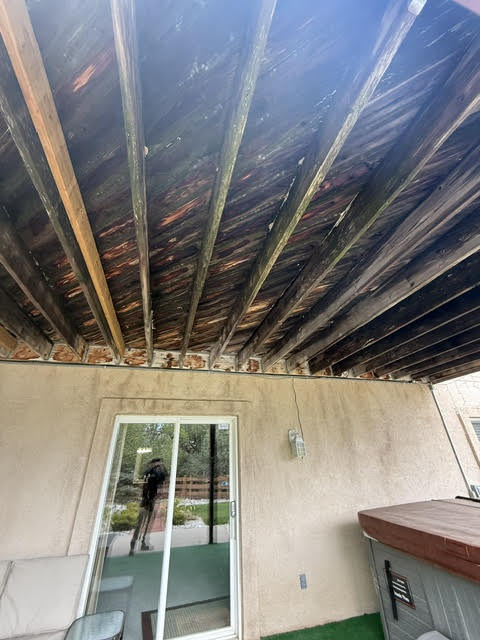
Moisture is one of the biggest threats to any deck. Rot often develops inside joists, beams, ledger boards, and support posts where it may go unnoticed for years. By the time visible signs appear, significant structural damage may already exist.
Loose or Wobbly Railings
Railing systems are one of the most important safety features on a deck. Loose posts, deteriorated framing, and improper connections can create dangerous conditions for family members and guests.
Deck Board Deterioration
Wood decking can crack, split, warp, and develop soft spots over time. Even composite decking systems can experience underlying framing problems that affect performance and safety.
Failing Joists and Beams
The framing beneath your deck does all the heavy lifting. As joists and beams age, they can weaken due to moisture intrusion, improper construction methods, or simple wear over time.
Corroded Hardware and Fasteners
Many older decks were built with hardware that was not designed for today’s treated lumber. Corroded hangers, fasteners, and connectors can compromise the structural integrity of the entire deck.
Ignoring these issues often turns a simple repair into a much larger and more expensive project.
The Biggest Deck Repair Mistake We See
One of the most common misconceptions homeowners have is that if the decking surface looks good, the deck itself must be in good condition.
In reality, we frequently inspect decks where the decking appears perfectly serviceable while the framing underneath has extensive deterioration.
Recently, we inspected a deck in Colorado Springs where the composite decking looked nearly new. After removing several boards, we discovered significant deterioration in the rim joist and supporting framing that was completely hidden from view.
This is why professional inspections are so important. The most serious deck problems are often the ones you cannot see.
9 Warning Signs Your Deck May Need Repairs
1. Soft or Spongy Deck Boards
If portions of your deck feel soft, springy, or unstable when walked on, moisture may have compromised the decking or framing below. Soft spots should never be ignored because they often indicate hidden deterioration.
2. Loose or Wobbly Railings
Railings should feel solid and secure. If your railing moves when pressure is applied, the connection points or supporting structure may be failing. Loose railings are one of the most common safety concerns we encounter during inspections.
3. Cracked, Split, or Warped Boards
Cracks and splits allow water to penetrate deeper into the wood, accelerating deterioration. While some weathering is normal, excessive cracking can signal that repairs are needed.
4. Sagging Areas of the Deck
A deck should feel firm and level underfoot. Sagging sections may indicate failing joists, beams, support posts, or footings and should be evaluated immediately.
5. Water Stains or Standing Water
Water that consistently pools on your deck or leaves staining beneath the structure can contribute to premature deterioration. Proper drainage is critical to long-term performance.
6. Rusted Hardware and Fasteners
Structural connectors, joist hangers, bolts, and screws play a critical role in supporting your deck. Rust, corrosion, and deterioration can significantly weaken these connections.
7. Rot at the Base of Support Posts
Deck posts frequently deteriorate where they meet concrete or where moisture becomes trapped. Even minor decay in a support post can affect the stability of the entire structure.
8. Excessive Bounce or Movement
If your deck feels bouncy or moves excessively when people walk across it, structural reinforcement may be necessary. Excessive movement often indicates framing or support issues.
9. Stairs That Feel Loose or Unstable
Deck stairs experience significant wear over time. Loose treads, cracked stringers, unstable landings, and deteriorated connections can create serious safety hazards if not addressed promptly.
Common Deck Repairs We Perform
Not every damaged deck needs to be replaced. In many cases, targeted repairs can safely extend the life of the structure for years.
Joist and Beam Replacement
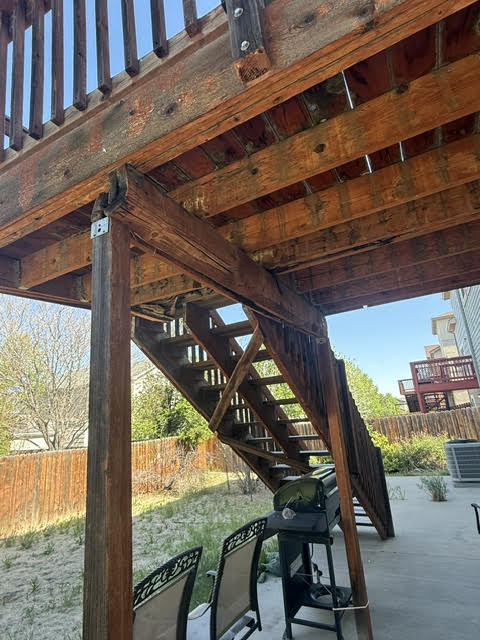
Joists and beams form the backbone of your deck. Replacing deteriorated framing members before they fail can prevent costly structural damage and significantly extend the lifespan of the deck.
Deck Board Replacement
Individual boards that have cracked, split, or deteriorated can often be replaced without replacing the entire deck surface.
Support Post Replacement
When support posts show signs of rot or deterioration, replacing them helps restore structural stability and prevent future movement.
Railing Repair and Reinforcement
Strengthening railing posts, replacing damaged sections, and improving attachment methods can restore safety while improving appearance.
Stair Repairs
We regularly repair and rebuild stairs affected by rot, settlement, loose connections, and structural deterioration.
How Deck Repair in Colorado Springs Can Save You Money
Regular maintenance and inspections are almost always less expensive than major structural repairs.
Proactive maintenance can:
• Extend the life of your deck by many years
• Help identify hidden problems before they become major repairs
• Improve safety for family and guests
• Protect your home’s value
• Reduce long-term ownership costs
A well-maintained deck can often provide decades of safe service, while neglected decks frequently require extensive repairs or replacement much sooner.
How Often Should You Inspect Your Deck?
We recommend homeowners perform a visual inspection of their deck several times each year, especially after winter weather, heavy snow events, or severe storms.
In addition, a professional deck inspection should be considered annually, particularly for decks that are more than 10 years old.
Many structural issues begin in areas that are difficult to inspect without professional experience and access to the underside of the deck.
Homeowners can also review deck safety information and industry best practices published by the North American Deck and Railing Association (NADRA).
Should You Repair or Replace Your Deck?
This is one of the most common questions we receive.
The answer depends on several factors, including:
• The age of the deck
• The condition of the framing
• The extent of the damage
• The cost of repairs compared to replacement
• Future plans for the property
In many cases, strategic repairs can safely extend the life of a deck for years. In other situations, replacement may be the more cost-effective long-term investment.
A professional inspection can help determine the best course of action.
Frequently Asked Questions
How long does a wood deck last in Colorado Springs?
A properly built and maintained wood deck can often last 20 to 30 years. Exposure to Colorado’s sun, snow, moisture, and freeze-thaw cycles can shorten that lifespan if maintenance is neglected.
Can a rotted deck be repaired?
Yes. Many decks with localized rot can be successfully repaired by replacing affected framing members, deck boards, railings, or support posts. The extent of the damage determines whether repair or replacement is the better option.
What parts of a deck typically rot first?
We most commonly find deterioration in ledger boards, rim joists, support posts, stair framing, and areas where moisture becomes trapped.
How do I know if my deck is structurally safe?
Visible movement, loose railings, sagging framing, soft spots, rot, and deteriorated hardware are all warning signs. A professional inspection is the most reliable way to evaluate the structural condition of a deck.
Is deck repair less expensive than replacement?
In many cases, yes. Addressing problems early can significantly reduce repair costs and delay the need for a complete replacement.
Schedule a Professional Deck Inspection
If your deck is showing signs of wear, movement, rot, or deterioration, don’t wait for small issues to become major structural problems.
At O’Leary & Sons, we specialize in deck inspections, structural repairs, joist and beam replacement, stair repairs, railing repairs, and complete deck rebuilds throughout Colorado Springs and the surrounding communities.
Whether your deck needs a simple repair or a comprehensive restoration, our team can help you understand your options and develop a solution that is safe, durable, and built to last.
Contact O’Leary & Sons today to schedule your deck inspection and estimate.